Turn water problems into funded projects.
Pipelines, tanks, and wells are expensive — but the right programs can cover a big share of the cost. Rangeworks helps you find them and stay on top of the paperwork.
Water is usually the limiting factor.
Poor water distribution limits grazing more than almost anything else. Cattle congregate around the few available sources, overgrazing corners while leaving distant pastures underused. The result: less forage, more erosion, and riparian damage that can take years to heal.
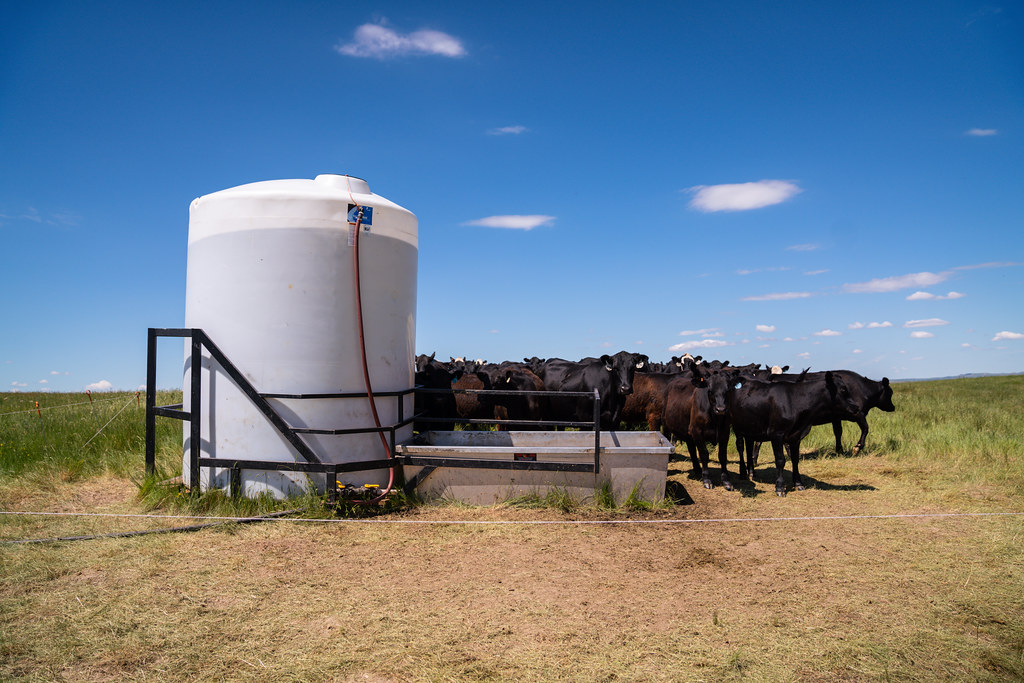
Stock-water projects — pipelines, tanks, wells, spring developments — open up new acres, spread grazing pressure, and protect streams. These are exactly the kinds of improvements that NRCS and state programs are designed to fund. The catch is knowing which programs apply and how to present your project clearly.
Featured Program
EQIP Stock Water Development
Administered by USDA Natural Resources Conservation Service (NRCS)
EQIP funds pipelines, tanks, watering facilities, troughs, wells, and spring developments as part of grazing and water-quality conservation plans. The goal is to move cattle away from sensitive areas while improving grazing distribution across your operation.
Example: Using stock water development to rest riparian areas
The Wisdom Reach Stock Water Development project in Montana used EQIP funding to install pipelines and tanks that moved cattle away from riparian zones. By providing reliable water in upland pastures, the project reduced pressure on streams and improved grazing distribution across the operation.
The outcome: healthier riparian areas, more uniform grazing, and better long-term range condition. Projects like this are common across the West, where water is scarce and cattle naturally concentrate near creeks and springs.
Two ways to approach this
You can tackle the paperwork alone, or let Rangeworks handle the heavy lifting.
Path A: Piecing together water funding by hand
- 1Identify which NRCS or state water programs apply to your location.
- 2Pull engineering and design specs for pipelines, tanks, and wells.
- 3Collect maps, elevation data, and resource concerns for each pasture.
- 4Complete multiple application forms and technical worksheets.
- 5Coordinate site visits and design revisions with agency staff.
- 6Track ranking periods, funding rounds, and required signatures.
- 7Maintain records and certifications after construction.
Path B: One place to plan, price, and pursue water projects
- 1Describe your current water situation and bottlenecks in Rangeworks (where cattle run out of water, where you'd like to move them).
- 2Rangeworks surfaces water-related programs (EQIP and state/local options) based on your ranch profile and state.
- 3Rangeworks uses your fields, pastures, maps, and notes to draft a clear project summary and list of eligible practices.
- 4Task lists and reminders keep you on top of site visits, forms, and deadlines as you work with NRCS or your local conservation district.
Fewer steps. Clearer language. One place for everything.
Take the work off your desk — not out of your hands.
Rangeworks helps you organize programs, prepare stronger drafts, and stay ahead of deadlines — while you stay in control of every decision.
No contracts. Cancel anytime. We never sell your data.